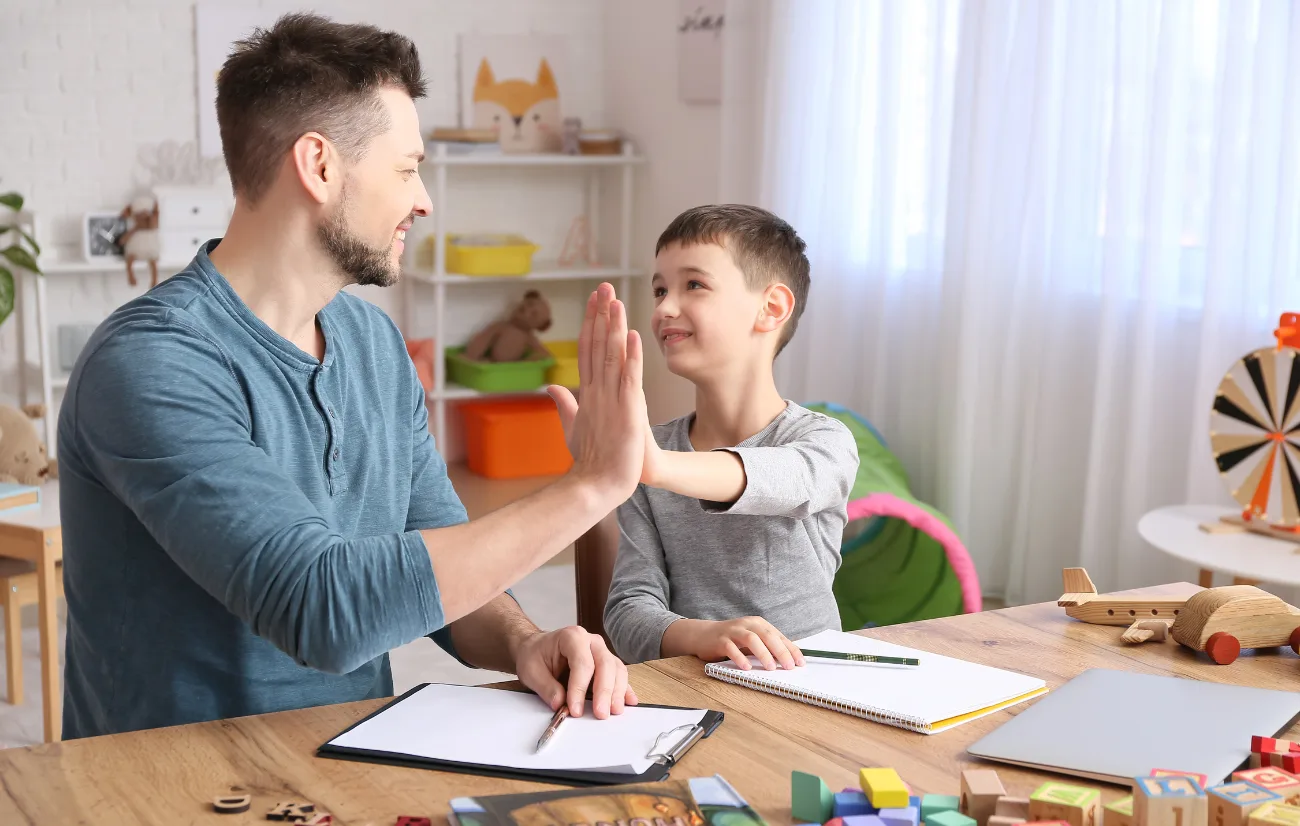
As a parent of a child with autism spectrum disorder (ASD), you want to help your child communicate effectively and connect meaningfully with the world around them. The good news is that with the right evidence-based strategies and consistent support, children with autism can make remarkable progress in their communication skills. At Bello Health Services, we’ve seen firsthand how targeted, neurodivergent-affirming approaches can unlock a child’s communication potential in the comfort of their own home.
Understanding Communication Challenges in Autism
Communication differences are a hallmark of autism spectrum disorder, affecting how children express their needs, understand others, and engage socially. These challenges might include delayed spoken language, difficulty with conversational skills, repetitive language patterns, or trouble understanding nonverbal communication. However, it’s crucial to remember that every child with autism is unique, with their own strengths, interests, and communication style.
Evidence-Based Communication Strategies That Work
Visual Supports: The Foundation of Autism Communication
Visual supports are among the most effective tools for supporting children with autism, as many are naturally visual learners. These strategies provide concrete, predictable ways for children to understand and express themselves.
Practical Visual Support Strategies:
- Picture Exchange Communication System (PECS): Use picture cards to help your child communicate wants and needs, with research showing up to 51% improvement in communication skills.
- Visual schedules: Create predictable daily routines using pictures or symbols to reduce anxiety and improve understanding.
- First/Then boards: Show “first we do this, then we get that” to help with transitions and motivation.
- Choice boards: Offer visual options for snacks, activities, or toys to encourage decision-making and communication.
Functional Communication Training
Functional Communication Training (FCT) teaches children alternative ways to communicate that serve the same purpose as challenging behaviors. Instead of crying or acting out to get attention, children learn to use words, gestures, or pictures to express their needs.
FCT in Action:
- Teach specific phrases like “I want help” or “I need a break”
- Use consistent prompting and positive reinforcement
- Practice in natural settings where the communication is most needed
- Start with highly motivating items or activities.
Play-Based Communication Strategies
Play provides a natural, low-pressure environment for developing communication skills while building on your child’s interests and strengths.
Effective Play-Based Approaches:
- Follow your child’s lead: Join their play and expand on their interests rather than redirecting
- Parallel play: Play alongside your child with similar toys, modeling language naturally
- Turn-taking games: Simple activities like rolling a ball back and forth teach conversation basics
- Cause-and-effect toys: Use bubbles, music boxes, or wind-up toys to encourage requesting.
Video Modeling: Learning Through Observation
Video modeling leverages children’s natural ability to learn by watching others, providing clear, repeatable examples of desired communication behaviors.
How to Use Video Modeling:
- Create short videos of family members or peers demonstrating target skills
- Show videos of greetings, requesting, or social interactions
- Practice the modeled behavior immediately after watching
- Use apps or programs designed specifically for autism communication support.
Daily Routine Communication Strategies
Morning and Bedtime Routines
Transform daily routines into rich communication opportunities by:
- Narrating activities as you do them: “Now we’re brushing teeth. Brush, brush, brush!”
- Offering choices: “Do you want the blue toothbrush or red toothbrush?”
- Using consistent language and gestures for each step
- Celebrating attempts at communication, even if imperfect.
Mealtime Communication
Mealtimes offer natural opportunities for requesting, commenting, and social interaction:
- Practice requesting: “more,” “please,” “all done”
- Label foods, utensils, and actions
- Use visual supports for meal choices
- Model polite social language like “thank you” and “excuse me”.
Sensory and Music Activities
Many children with autism respond well to music and sensory experiences, which can be powerful communication tools :
- Singing and rhymes: Use predictable songs where your child can fill in missing words
- Musical instruments: Take turns with drums, shakers, or keyboards
- Sensory play: Use play dough, water, or sand while modeling descriptive language
- Movement songs: Action songs teach body parts and following directions.
Technology and Alternative Communication
Augmentative and Alternative Communication (AAC)
For children who struggle with spoken language, AAC devices and apps can provide powerful communication alternatives:
- Communication apps: iPad apps with picture symbols and voice output
- Speech-generating devices: Specialized devices for complex communication needs
- Sign language: Simple signs for basic needs and wants
- Gesture systems: Consistent hand signals for common requests
Creating a Communication-Rich Environment at Home
Environmental Modifications
Make your home environment supportive of communication by:
- Labeling common items: Put picture labels on doors, toys, and furniture
- Creating communication stations: Designate areas with visual supports and communication tools
- Reducing overwhelming stimuli: Minimize background noise and visual clutter during communication practice
- Using consistent language: All family members use the same words and phrases for common activities
Family Communication Strategies
Model Natural Communication:
- Narrate your own activities: “I’m making coffee. Pour the water. Now I’m stirring.”
- Use simple, clear language appropriate to your child’s level
- Give processing time – count to 10 before repeating or prompting
- Respond to all communication attempts, even if unclear
Create Communication Opportunities:
- Put preferred items in sight but out of reach to encourage requesting
- Create “communication temptations” by starting preferred activities then pausing
- Use sabotage strategies – give incomplete materials so your child needs to ask for more
- Practice in natural contexts where communication is meaningful
When to Seek Professional Support
While home strategies are incredibly valuable, professional speech pathology support can accelerate your child’s progress and provide specialized techniques tailored to their unique needs.
Consider Professional Support When:
- Your child isn’t meeting communication milestones
- Challenging behaviors are interfering with daily life
- You need guidance on AAC options
- School or daycare staff express concerns
- You want to optimize your child’s communication potential
The Mobile Therapy Advantage for Children with Autism
Mobile speech pathology services offer unique benefits for children with autism, who often struggle with transitions and unfamiliar environments
- Reduced anxiety: Therapy in familiar surroundings promotes better engagement
- Natural generalization: Skills learned at home transfer more easily to daily routines
- Family involvement: Parents become active partners in their child’s progress
- Individualized environment: Sessions adapt to your child’s sensory needs and preferences
- Consistent routine: Regular home visits provide predictable structureSP-and-OT-website.docx
Building Communication Confidence
Remember that communication development for children with autism is a journey, not a destination. Celebrate every attempt at communication, whether it’s a gesture, a sound, a word, or eye contact. Your child’s unique way of communicating is valid and valuable.
Key Principles to Remember:
- Presume competence: Believe in your child’s ability to communicate and learn
- Follow their lead: Build on their interests and strengths
- Be patient: Allow processing time and multiple attempts
- Stay consistent: Use the same strategies across different settings
- Celebrate progress: Acknowledge small steps toward bigger goals
Moving Forward with Confidence
Supporting your child with autism in developing communication skills is one of the most important investments you can make in their future independence and happiness. With evidence-based strategies, consistent practice, and professional support when needed, children with autism can develop meaningful communication skills that serve them throughout their lives.
At Bello Health Services, we’re passionate about supporting families on this journey through neurodivergent-affirming, mobile speech pathology services across the Gold Coast. Every child deserves to have their voice heard and their communication celebrated.
Ready to explore communication strategies for your child with autism?
Contact Bello Speech Pathology to discuss how mobile speech therapy can support your family’s unique needs and help your child develop confident communication skills in the comfort of home.